
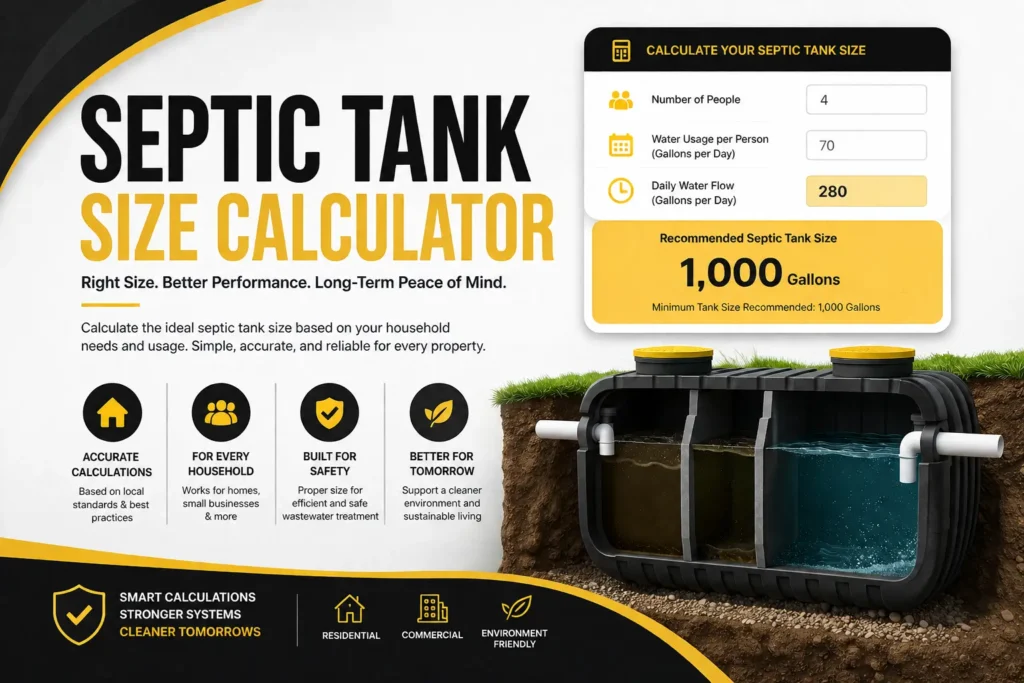
A properly sized septic tank is one of the most important parts of an efficient wastewater management system. Whether you are building a new home, replacing an old septic system, or planning a construction project, understanding how to determine the right tank capacity can save you from expensive repairs and other maintenance issues in the future.
At All Types of Calculators, we believe that perfect calculations help people make smarter decisions. This guide explains everything you need to know about septic tank size calculator using daily water consumption. So, let’s discuss without wasting any moment.
Why Septic Tank Size Matters
A septic tank is designed to collect and treat wastewater from your home before it enters the drain field. If the tank is too small, it can overflow, clog the drain field, and create unpleasant odors. If it’s unnecessarily large, you may spend more money than needed on installation. The perfect size tank ensures
- Better wastewater treatment
- Longer system lifespan
- Lower maintenance costs
- Improved environmental protection
- Compliance with local regulations
Understanding Daily Water Consumption
Daily water consumption refers to the amount of water your household uses every day. Almost all of this water eventually reaches the septic system.
Common Household Activities Include:
- Showering
- Toilet flushing
- Laundry
- Dishwashing
- Cooking
- Cleaning
- Hand washing
In short, the more water your family uses, the larger your septic tank generally needs to be.
Average Daily Water Usage
The following are some common estimates of daily water usage:
| Household Size | Daily Water Consumption |
| 1–2 People | 150–250 gallons |
| 3–4 People | 300–450 gallons |
| 5–6 People | 500–700 gallons |
| 7+ People | 700+ gallons |
How to Calculate Septic Tank Size
The calculation principle is very straightforward. Your septic tank should be able to store wastewater for an adequate retention period while allowing solids to settle properly. By following this given formula, you can easily calculate your septic tank size.
Septic Tank Size = Daily Water Consumption × Retention Time
While on the other hand, most residential systems are designed for approximately 24 to 48 hours of wastewater retention, depending on local regulations.
Factors That Affect Septic Tank Size
Daily water consumption is important, but it’s not the only factor. The following are the factors that may affect it.
Number of Bedrooms
Many building codes determine septic tank capacity based on the number of bedrooms rather than the current number of occupants because future occupancy may increase.
Household Size
Larger families naturally generate more wastewater due to higher daily water use for cooking, cleaning, bathing, and sanitation. As the number of household members increases, the volume of wastewater produced also rises. This results in greater demand on wastewater collection, treatment, and disposal systems.
Water-Efficient Fixtures
Modern low-flow toilets, faucets, and showerheads can reduce overall water consumption, which may influence the results when you calculate septic tank size.
Local Building Codes
It is one of the key factors that you should keep in mind that every region has its own septic system requirements. Always check local regulations before finalizing your installation.
Typical Residential Septic Tank Sizes
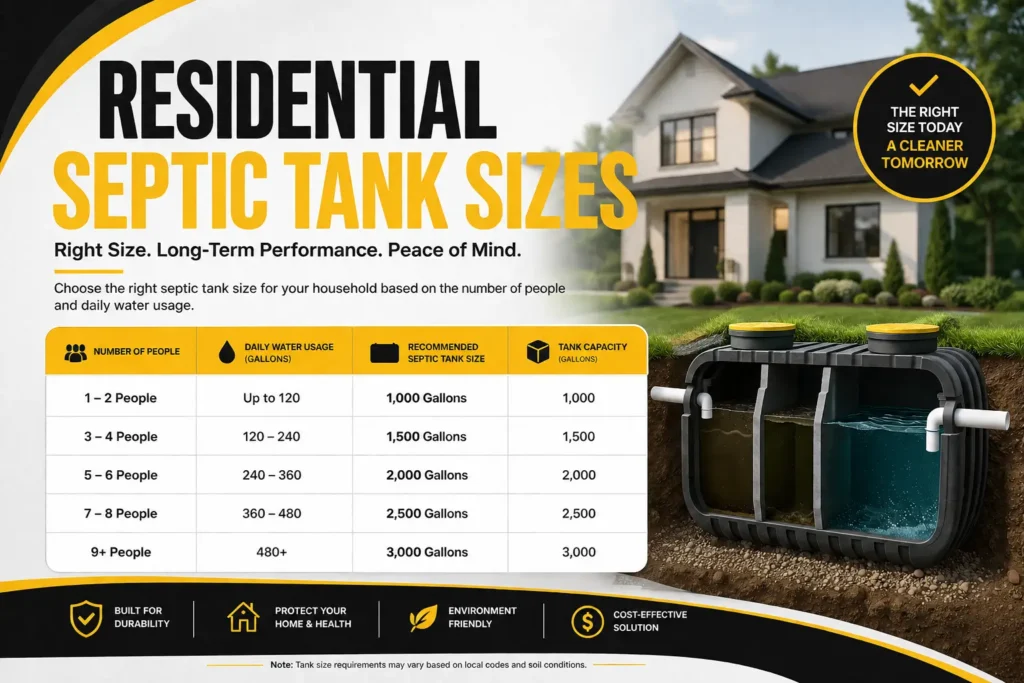
Let’s discuss the residential septic tank sizes and capacities.
| Home Size | Typical Tank Capacity |
| 1–2 Bedrooms | 750–1,000 gallons |
| 3 Bedrooms | 1,000 gallons |
| 4 Bedrooms | 1,250 gallons |
| 5 Bedrooms | 1,500 gallons |
| Large Homes | 2,000 gallons or more |
Benefits of Using Our Online Septic Tank Size By Daily Water Use
- Instant results
- Easy to use
- Saves time
- Suitable for homeowners
- Helpful for builders and contractors
- Improves planning accuracy
Essential Tips to Reduce Septic Tank Problems
- Pump the tank regularly.
- Repair leaking plumbing fixtures.
- Avoid flushing grease and chemicals.
- Use water efficiently.
- Spread laundry loads throughout the week.
- Protect the drain field from heavy vehicles.
Final Thoughts
To conclude the discussion, I would like to say that selecting the right septic tank size is essential for maintaining an efficient and long-lasting wastewater system. Daily water consumption remains one of the most reliable methods for estimating the required capacity, helping homeowners avoid costly mistakes and unnecessary maintenance.
For quick estimates and reliable calculation tools, trust All Types Calculators to help you choose the right septic tank capacity with confidence. A dependable septic tank size calculation by water usage can simplify planning, improve decision-making, and ensure your septic system performs efficiently for years to come.
Frequently Asked Questions
How do you calculate the size of a septic tank?
To calculate the size of a septic tank, multiply your household’s daily water consumption by the required retention time (typically 24–48 hours). You can also use a Septic Tank Size By Daily Water Use for a quick and accurate estimate based on your water usage.
How many liters is a 6-person septic tank?
The minimum septic tank size depends on the number of bedrooms and occupants. Homes with 1–3 bedrooms (up to 5 people) require at least 2,750 liters, while 4, 5, and 6-bedroom homes need 2,900, 3,050, and 3,200 liters, respectively.
Septic tank size for 10 users?
A septic tank for 10 users should have a minimum capacity of 3,500–4,000 liters (1,000–1,500 gallons). This size can handle the extra wastewater and gives enough time for solid waste to settle properly.
Standard size of septic tank in meters?
There is no fixed standard septic tank size because it depends on the number of people in your home and your daily wastewater usage. Most residential septic tanks range from 2.0 × 1.2 × 1.5 m for small homes to 3.0 × 2.0 × 2.0 m for larger households.